Zanzibar Safari
A Zanzibar safari covers two distinct types of wildlife experience: on-island nature safaris at Jozani Chwaka Bay National Park and fly-in game drive safaris to the Tanzanian mainland parks of Mikumi and Nyerere (Selous). Visitors based in Zanzibar can reach Mikumi National Park in around 45 to 60 minutes by charter flight, while Nyerere National Park takes approximately 60 to 75 minutes. Both options sit within easy range for a day trip, making Zanzibar one of the most practical beach-and-safari combinations in East Africa in 2026. Jozani Forest, meanwhile, offers a half-day wildlife walk on the island itself, with the rare red colobus monkey as the main draw.
What Safari Options Are Available from Zanzibar
Travelers planning a Zanzibar safari in 2026 have three main formats to choose from. The first is the on-island walking safari at Jozani Chwaka Bay National Park, which takes half a day and requires no flights. The forest forms part of Jozani Chwaka Bay National Park, the only national park on the island of Zanzibar. The second option is a fly-in day trip to either Mikumi or Nyerere National Park on the mainland, returning to Zanzibar the same evening. The third is an overnight or multi-day mainland safari, where you fly in, sleep at a bush camp or lodge, complete both morning and evening game drives, then fly back. An overnight safari means you fly in on day one, do an afternoon game drive, sleep at a lodge or tented camp in or near the park, wake up for an early-morning game drive the next day, and fly back to Zanzibar by midday. Each format suits a different type of traveler depending on time available and budget.
| Safari Type | Duration | Difficulty | Approx. Cost (per person) | Best Season |
|---|---|---|---|---|
| Jozani Forest Walk (on-island) | 2 to 4 hours | Easy | $20 to $80 | Year-round |
| Mikumi Day Trip Safari (fly-in) | Full day | Easy | $350 to $450 per person | June to October |
| Nyerere (Selous) Day Trip Safari | Full day | Easy | $450 to $550 per person | June to October |
| Mikumi Overnight Safari | 2 days / 1 night | Easy | $700 to $1,200 per person | June to October |
| Nyerere 2-Day Fly-In Safari | 2 days / 1 night | Easy | $900 to $1,500 per person | June to October |
| Tanzania Bush and Beach Package | 6 to 12 days | Easy | $1,500 to $3,500 per person | Year-round |
Mikumi National Park Safaris from Zanzibar
Mikumi is the park most often recommended for travelers doing a day trip from Zanzibar. It is large enough to deliver a genuinely exciting wildlife experience but compact enough to see a lot in a single game drive. Local guides have nicknamed it the “Little Serengeti” because the Mkata Floodplain, the park’s open grassland heart, resembles the Serengeti’s famous plains in miniature.
Mikumi National Park is located 283 kilometers west of Dar es Salaam and is accessible by flight from Zanzibar in about one hour. Spanning 3,230 square kilometers, the park is characterized by the Mkata Floodplain, a vital ecosystem that supports a rich diversity of wildlife, including elephants, lions, leopards, buffalo, and rare sable antelopes. On a standard day trip, you enjoy an exciting game drive in a 4×4 vehicle guided by an expert, searching for the Big Four across the savannah. After lunch, a second game drive takes you through acacia woodlands to floodplains while spotting elephants, zebras, giraffes, lions, and numerous bird species.
You can see four of the Big Five on a Mikumi safari, including lion, elephant, buffalo, and occasionally leopard. Rhinos are not present in Mikumi National Park. Realistic expectations matter here. Spotting lions and leopard in a single day is possible but not guaranteed. Elephants, zebra, giraffe, hippo, and large bird populations are reliably seen throughout the year.
Nyerere National Park Safaris from Zanzibar
The Selous, officially renamed Nyerere National Park in 2019 in honour of Tanzania’s founding president, is one of the most extraordinary wildlife areas on the African continent. It covers an area larger than Switzerland and protects one of the most diverse ecosystems in Africa. For travelers flying from Zanzibar, a twin-engine aircraft reaches Nyerere National Park in as little as 35 minutes.
What makes Selous different from most other East African parks is the variety of safari activities on offer. It is one of the few reserves in Tanzania where you can do a boat safari on the Rufiji River alongside your standard game drive, and floating quietly past hippos, crocodiles, and elephants drinking at the bank is an experience unlike anything else. Good numbers of big cats such as lion, leopard, and cheetah are to be found here along with other large game animals such as elephant, buffalo, giraffe, eland, zebra, wildebeest, and other wildlife. The park is largely less frequented by tourists, which means the animals here tend to be less exposed to humans.
A two-day fly-in safari to Nyerere is a strong option for anyone who can spare the extra night. This format allows you to combine a game drive, walking safari, and boat safari, guided by experts in one of Africa’s wildest and least crowded parks. Walking safaris in Nyerere are conducted with an armed ranger, and the river boat option on the Rufiji is a format not available in most Tanzanian parks.
Jozani Forest Safaris on Zanzibar Island
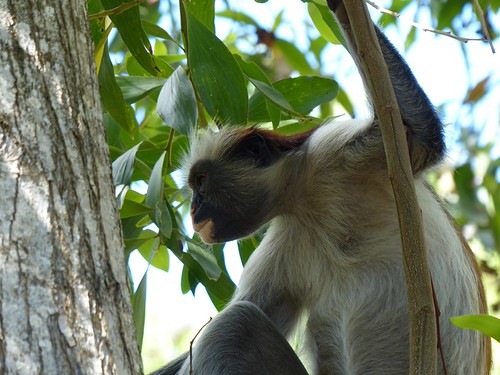
Not every Zanzibar safari requires a flight to the mainland. Jozani Chwaka Bay National Park delivers a genuine wildlife encounter on the island itself, anchored by one of the rarest primates in Africa. Jozani Forest is the only place in the world where you can find the endangered red colobus monkey. The Zanzibar red colobus is a species endemic to Unguja, the main island of the Zanzibar Archipelago. It is also known as Kirk’s red colobus after Sir John Kirk, the British Resident of Zanzibar who first brought it to the attention of zoological science. It is now classified as an endangered species and in the mid-1990s was adopted as the flagship species for conservation in Zanzibar.
The park covers about 50 square kilometers and is home to more than 50 butterfly species and 40 bird species. Beyond the colobus monkeys, the jungle offers habitation to blue or Sykes’ monkeys, bush pigs, diminutive Ader’s duiker and suni antelopes, elephant shrews, chameleons, and a multitude of birds and butterflies. The mangrove boardwalk is another popular experience in Jozani Forest. Walking along the wooden path gives you a close view of the mangrove ecosystem, which provides breeding grounds for fish, crabs, and many bird species.
Jozani Forest is roughly a 30-minute drive from Stone Town. The Jozani Forest tour is ideal during Zanzibar’s dry seasons, from June to October and December to February, when the forest trails are accessible and wildlife activity is high. Morning visits are recommended for better lighting, cooler temperatures, and increased chances of spotting monkeys and birds.
Day Trip vs. Overnight Safari from Zanzibar
Choosing between a day trip and an overnight safari is the most practical planning decision you will face. A day trip gives you a genuine safari experience and is well worth doing. That said, overnight safaris are significantly more immersive as you get both evening and morning game drives, you hear the sounds of the bush at night, and you have more time to really explore the park. If you can spare two days, the overnight option is a strong recommendation.
Day trips work well for travelers whose Zanzibar accommodation is already set and who want to add wildlife without restructuring their trip. Overnight trips suit anyone prioritising wildlife depth over convenience. Mikumi is ideal if you want a true introduction to African wildlife without committing to long itineraries or high costs. If Zanzibar is your main destination and safari is an add-on, Mikumi fits seamlessly without disrupting your beach time.
Best Time for a Zanzibar Safari in 2026
| Month | Mainland Safari Conditions | Jozani Forest | Notes |
|---|---|---|---|
| January to February | Good, drier short dry spell | Good | Less crowded, warm |
| March to May | Difficult, long rains | Trails can be muddy | Avoid for mainland safaris |
| June to August | Excellent, peak dry season | Excellent | Best wildlife viewing, busiest period |
| September to October | Excellent, dry season continues | Excellent | Strong wildlife concentrations at water |
| November to December | Mixed, short rains possible | Good | Lush scenery, fewer visitors |
The best time for Tanzania safaris is during the dry season, from June to October. This period offers clear skies, fewer rains, and ideal conditions for wildlife viewing. Zanzibar Island has two wet seasons. The long rains begin in March and peak in April and May, slowing down by June, while the short rains fall in November and December. Avoid booking a mainland day-trip safari during the long rains, as flights may be disrupted and game drive tracks in Mikumi and Nyerere can become impassable.
Zanzibar Safari Costs in 2026
Mikumi safari packages from Zanzibar start from $400 for single-traveler day trips and from $350 per person for group tours. The cost of a day safari trip to Selous (Nyerere) from Zanzibar ranges from $450 to $550 per person flying from Zanzibar. Multi-day bush and beach packages combining mainland safari days with beach time in Zanzibar start from around $1,500 per person and scale up depending on accommodation standard and itinerary length.
| Cost Item | Estimated Price (USD) |
|---|---|
| Jozani Forest entrance fee (self-guided) | $7 to $10 per person |
| Jozani Forest guided tour (private, 2 guests) | $80 to $200 |
| Mikumi day trip safari from Zanzibar (group rate) | $350 to $400 per person |
| Mikumi day trip safari from Zanzibar (solo/private) | $400 to $500 per person |
| Nyerere (Selous) day trip safari from Zanzibar | $450 to $550 per person |
| Nyerere park entry fee | $50 per adult per day |
| Mikumi or Nyerere overnight fly-in safari (2 days) | $900 to $1,500 per person |
| Combined Tanzania safari and Zanzibar beach package (6 to 8 days) | $1,500 to $3,500 per person |
Jozani Forest half-day walk plus one day trip to Mikumi on a group tour. Total safari spend: approximately $400 to $450 per person. No overnight mainland accommodation required.
One overnight fly-in safari to Mikumi or Nyerere with a tented camp, plus Jozani Forest walk. Total safari spend: approximately $900 to $1,400 per person over two days.

More Island Stories
Prison Island Zanzibar
Prison Island Zanzibar